In a world that seems to be perpetually stuck in “fast-forward,” the concept of a “slow morning” can feel like a radical act of rebellion. We are conditioned to wake up to the jarring blare of an alarm, immediately check our notifications, and dive headfirst into the digital slipstream of emails, news, and social media. By the time our feet hit the floor, our cortisol levels are already peaking.
But what if there was another way? What if the first hour of your day wasn’t a race, but a ritual?
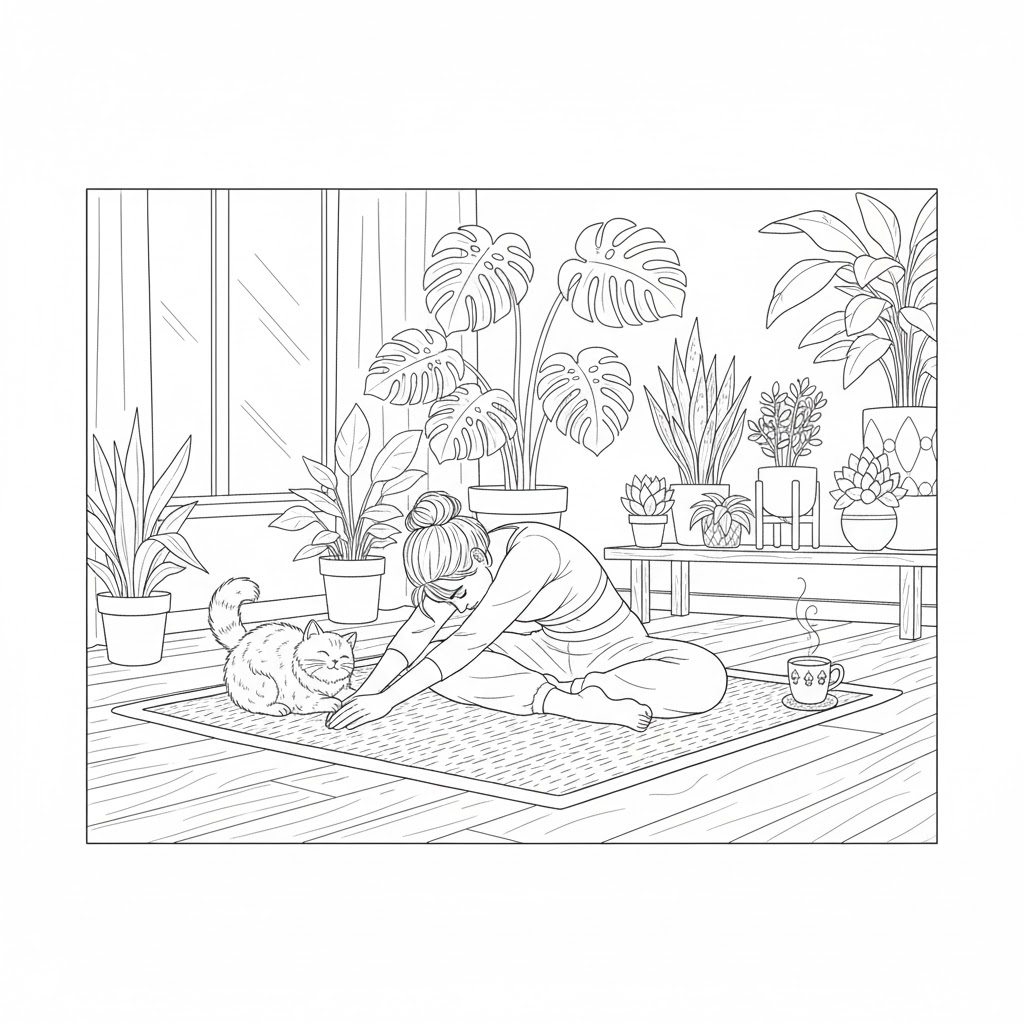
The illustration above captures a scene that many of us dream of but few of us consistently inhabit: a quiet room, bathed in soft light, filled with life (both leafy and furry), where the only “to-do” is to simply be. This isn’t just an aesthetic; it’s a blueprint for mental well-being.
The Anatomy of a Mindful Morning
Let’s break down the elements of this “zen” space and see how we can translate them into our own daily lives, even if we don’t live in a sun-drenched botanical garden.
1. Movement Over Momentum
In the image, we see a woman in a seated forward fold. She isn’t checking her watch or pushing for a “personal best.” This is intuitive movement. Stretching first thing in the morning isn’t just about flexibility; it’s about checking in with your physical vessel.
When we sleep, our fascia—the connective tissue surrounding our muscles—can tighten. Gentle stretching or yoga sends a signal to the nervous system that it is safe to wake up. It transitions the body from the parasympathetic state (rest and digest) to a balanced state of alertness without the “fight or flight” response triggered by a loud alarm or a stressful email.
2. The Green Sanctuary
The room is overflowing with plants—Monstera deliciosa, Snake plants, and various succulents. There is a biological reason why we find this image so soothing. Biophilia is the innate human instinct to connect with nature and other living beings.
Research has consistently shown that indoor plants can:
- Reduce stress levels by suppressing sympathetic nervous system activity.
- Improve air quality by absorbing toxins and producing oxygen.
- Boost productivity and creativity by providing a “micro-break” for the eyes and mind.
Even if you don’t have a green thumb, starting with one resilient plant (like the Snake plant pictured on the far left) can transform the energy of your living space.
3. The Power of “Pet Therapy”
The cat sitting on the mat isn’t just a cute detail; it’s a vital part of the grounding process. Interacting with a pet lowers blood pressure and releases oxytocin, the “cuddle hormone.” In our digital age, we are often starved for tactile, non-digital connection. Feeling the soft fur of a pet or watching their calm, rhythmic breathing helps tether us to the present moment. Animals are masters of the “now”—they aren’t worried about yesterday’s meeting or tomorrow’s deadlines. We can learn a lot from them.
4. The Ritual of the Warm Cup
Notice the steaming mug sitting on a coaster. Whether it’s herbal tea, ceremonial cacao, or a simple cup of coffee, the warm beverage ritual serves as a sensory anchor. The warmth in your hands, the aroma, and the steam create a multi-sensory experience that demands you slow down. You cannot rush a hot drink without burning yourself; it forces a pace that is naturally meditative.
Why “Slow” is Actually “Productive”
We often skip these moments because we feel we don’t have time. We think, “If I spend 20 minutes stretching and drinking tea, I’ll be 20 minutes behind.”
This is a fundamental misunderstanding of human energy.
When you start your day in a state of high stress, your brain operates from the amygdala—the lizard brain responsible for fear and survival. This makes you more reactive, less creative, and prone to “busy work” rather than meaningful work.
By taking those 20 minutes for a “slow morning,” you allow your prefrontal cortex—the center for logic, planning, and emotional regulation—to take the wheel. You enter your workday with clarity and focus. You aren’t just doing more; you are doing better.
Creating Your Own Morning Canvas
You don’t need a massive window or a dozen plants to reclaim your morning. You can start with these three simple shifts:
- The No-Phone Zone: Keep your phone in another room for the first 30 minutes of your day. This protects your “mental real estate” from being colonized by other people’s priorities.
- Five Minutes of Presence: If a full yoga flow feels daunting, try five minutes of deep breathing or simple neck and shoulder rolls while your tea steeps.
- Find Your “Anchor”: Identify one thing in your environment that brings you peace. It could be the way the light hits a specific wall, the smell of your coffee, or the weight of a blanket. When your mind starts to race toward the day’s stressors, pull it back to that anchor.
Final Thoughts
The illustration we’re looking at is a coloring page—unfilled, waiting for pigment. In many ways, our mornings are the same. Every day is a blank slate. We can choose to fill it with the chaotic scribbles of stress, or we can take the time to shade in the quiet moments of peace, one breath at a time.
Life is rarely as perfectly composed as a drawing, but we have more control over our “inner atmosphere” than we think.