In the visual age of social media, we are constantly bombarded with images of “perfect” lives. However, every so often, an image resonates not because it looks expensive or unattainable, but because it feels like a deep, collective exhale.
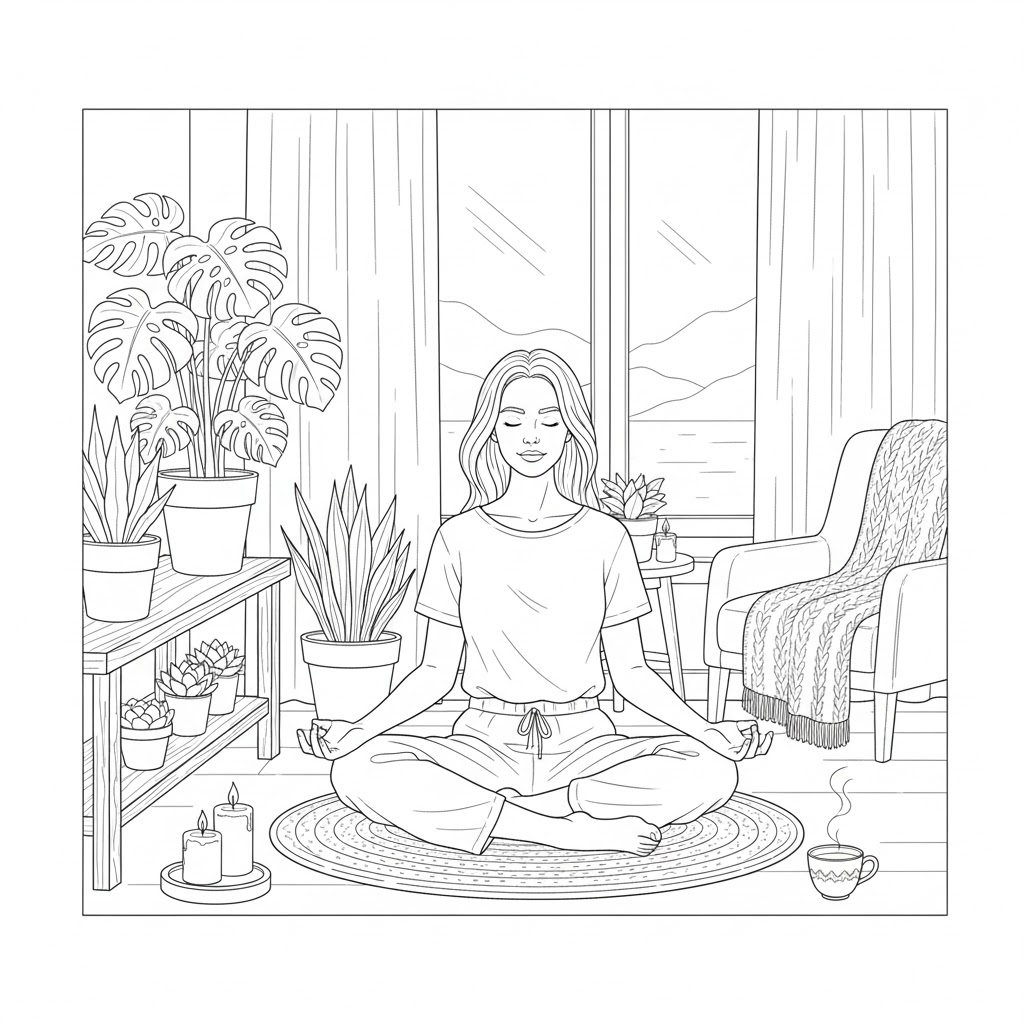
The illustration above—a woman seated in a cross-legged meditation pose, surrounded by lush greenery, soft textures, and the gentle glow of candles—is more than just a coloring page. it is a visual manifesto for mindful living.
In a world that demands our attention 24/7, carving out a “Sanctuary Within” is no longer a luxury; it is a necessity for mental and emotional survival. Let’s explore how we can take the elements of this peaceful scene and weave them into the fabric of our own busy lives.
1. The Power of Intentional Stillness
At the center of the image is the act of meditation. Her eyes are closed, her hands are in a mudra (a symbolic gesture), and her posture is upright yet relaxed.
Many people avoid meditation because they believe they “can’t stop thinking.” But here is a gentle correction: Meditation isn’t about stopping your thoughts; it’s about changing your relationship with them.
When you sit in stillness, you become the observer of the storm rather than being swept away by it. This practice has profound physiological effects, including:
- Lowering Cortisol: Regular meditation significantly reduces the primary stress hormone.
- Increasing Gray Matter: Studies show that consistent practice can increase density in parts of the brain associated with memory, empathy, and sense of self.
- Improving Emotional Regulation: It creates a “buffer” between a stimulus (like a rude email) and your response.
2. The Biophilic Connection: Healing with Greenery
The room is a literal indoor jungle. From the broad, iconic leaves of the Monstera deliciosa to the sharp, upright Snake plants (Sansevieria), the environment is designed to ground the inhabitant.
Humans have a biological need to be near nature. When we bring plants into our living spaces, we aren’t just decorating; we are air-purifying and mood-boosting.
- Snake Plants: Known for releasing oxygen at night, making them perfect for bedrooms and morning meditation spaces.
- Monstera: Their large surface area helps regulate humidity and provides a striking visual focal point that reminds us of the slow, steady pace of growth.
Even if you live in a small apartment with limited light, a single succulent on a windowsill can serve as a reminder of the natural world’s resilience.
3. Sensory Anchors: Sight, Smell, and Touch
A successful meditation space engages the senses to help pull the mind away from abstract worries and back into the physical body.
- Light (The Candles): The candles in the foreground represent the element of fire and focus. Soft, flickering light mimics the natural rhythms of sunset and sunrise, signaling to the brain that it’s time to be calm. Using a scented candle with lavender or sandalwood can further deepen the relaxation response.
- Temperature (The Warm Drink): That steaming cup of tea or coffee isn’t just for caffeine; it’s a tactile anchor. The warmth spreading through your hands is a grounding sensation that keeps you present.
- Texture (The Knitted Throw): Notice the cozy blanket draped over the armchair. Incorporating soft textures like wool, cotton, or linen into your space provides a sense of safety and “nesting.”
4. Designing Your Personal Sanctuary
You don’t need a dedicated “yoga room” to achieve this feeling. Your sanctuary is defined more by your boundaries than your square footage.
| Element | Small Space Solution |
| Nature | A single “air plant” or even a view of a tree outside your window. |
| Stillness | A dedicated cushion or “meditation chair” used for nothing else. |
| Scent | Essential oil diffusers or a simple stick of incense. |
| Sound | Noise-canceling headphones with “brown noise” or forest sounds. |
5. Moving Beyond the Mat
The goal of a morning ritual like the one pictured isn’t just to feel good for those twenty minutes. It’s to carry that “inner sanctuary” with you into the chaos of the day.
When you start your morning by checking in with yourself before checking in with the world, you set the “tone” for your nervous system. You become less like a leaf being blown by the wind and more like the sturdy plants in the illustration—rooted, resilient, and reaching toward the light.
The “Micro-Meditation” Challenge
If an hour of silence feels impossible, start with what I call the “Three-Breath Reset.”
- Close your eyes (if safe).
- Inhale for 4 seconds, feeling your ribs expand.
- Exhale for 6 seconds, dropping your shoulders.
- Repeat three times.
This simple act mimics the deep state of the woman in the drawing and can be done at a red light, in an elevator, or before a difficult conversation.
Conclusion
We often wait for “the right time” to start taking care of our mental health—waiting until the house is clean, the kids are grown, or the job is less stressful. But the lesson of the “Sanctuary Within” is that peace is an inside job.
The woman in the image isn’t peaceful because her room is perfect; her room reflects the peace she is cultivating inside.