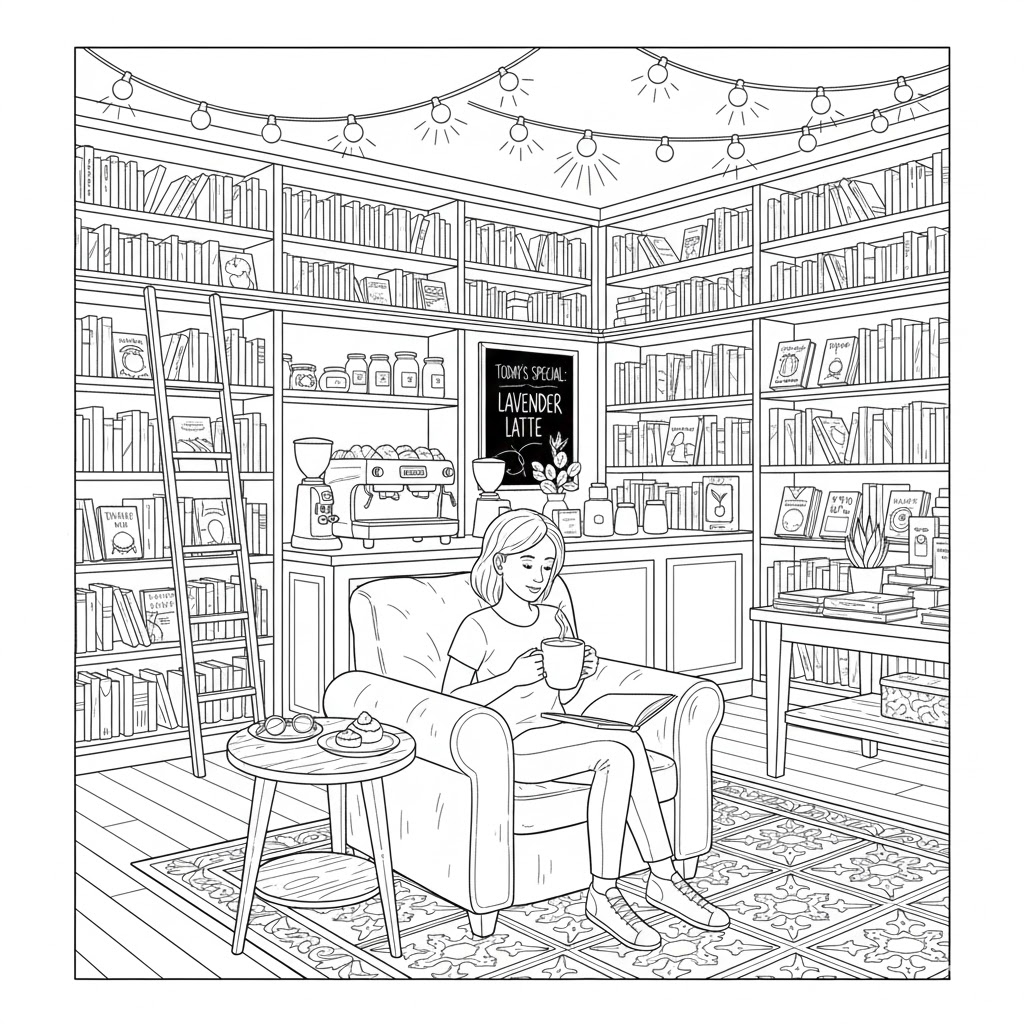
In an era where a thousand books can fit into a device thinner than a pencil, the image of a floor-to-ceiling library shouldn’t just be a nostalgic relic. Yet, “Bookstagram” and “BookTok” are thriving, and the desire for a physical reading nook has become a cornerstone of modern interior design. Why?
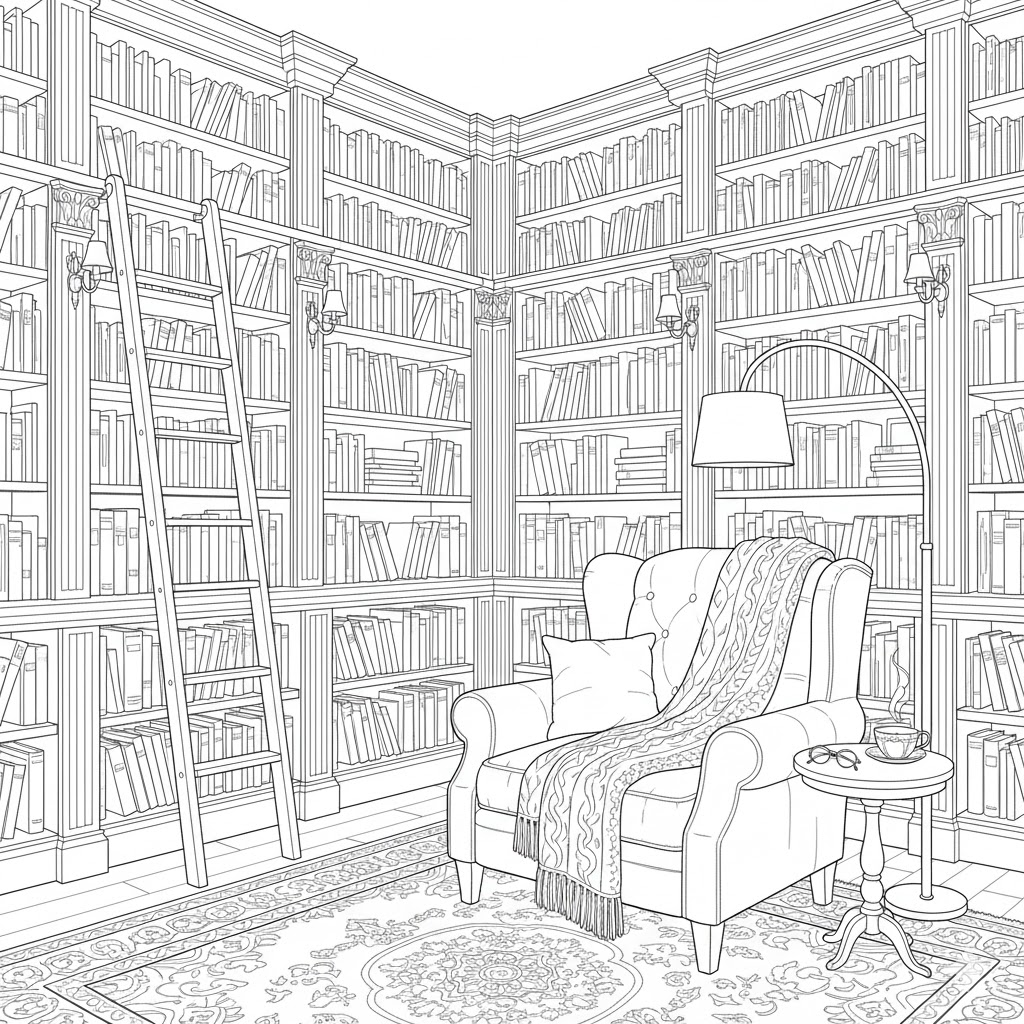
Because a room filled with books isn’t just about storage; it’s about cognitive architecture. When we step into a room like the one in the illustration, our brain receives a specific set of signals: Slow down. Focus. Disconnect.
1. The Haptic Magic of the Physical Book
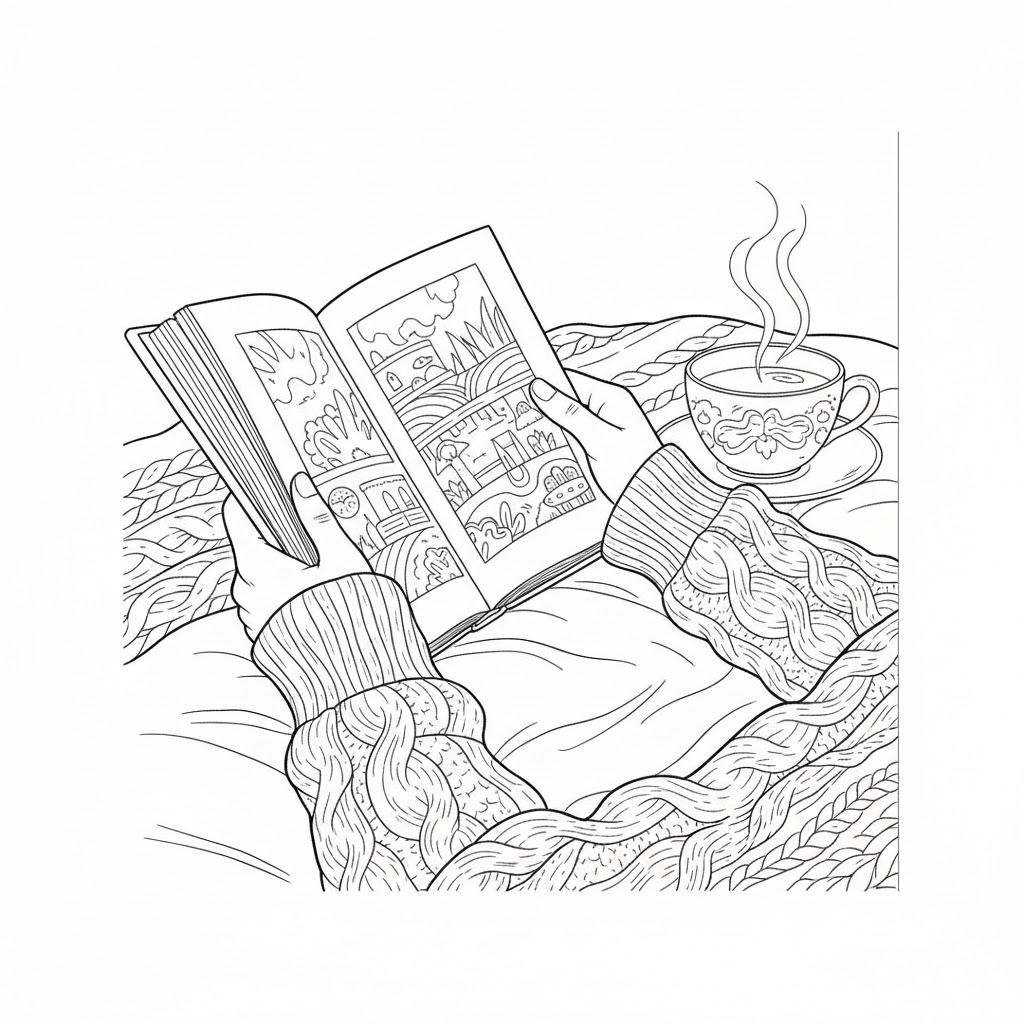
There is a term in psychology called haptic perception—the process of recognizing objects through touch. When you sit in that tufted armchair, draped in a heavy knit throw, and open a physical book, you are engaging in a multisensory experience that an e-reader cannot replicate.
- The Weight: The physical gravity of a book anchors you to the chair.
- The Scent: The “old book smell” (caused by the chemical breakdown of cellulose and lignin in paper) triggers the limbic system, the part of the brain responsible for emotion and memory.
- The Spatial Memory: Studies suggest that we remember information better when we read it on a physical page because our brains create a “topography” of the text. We remember that a specific quote was on the “bottom left of a page about halfway through the book.”
2. The Library as an “External Brain”
The philosopher Walter Benjamin once wrote about the “unpacked library.” He argued that a collection of books is a physical manifestation of a person’s internal world. When you look at the shelves in this illustration, you aren’t just looking at wood and paper; you’re looking at a map of interests, past phases of life, and future aspirations.
A personal library acts as an antedidactic—a reminder of everything we don’t know yet. This keeps us humble and curious. Seeing the spines of books we’ve read reminds us of who we were when we first read them, making the library a living autobiography.
Designing the Sanctuary: Lessons from the Illustration
If we were to translate this line drawing into a real-world space, there are specific design choices that make it feel so inviting. Let’s break down the “anatomy of a perfect reading nook.”
The “Command Center” (The Chair)
Notice the chair in the image. It’s a classic wingback style with deep button tufting. This isn’t just an aesthetic choice; it’s a functional one. The “wings” of the chair were originally designed to trap heat from a fireplace and protect the sitter from drafts. In a modern context, they provide visual blinkers. They wrap around your peripheral vision, cutting off the distractions of the rest of the room and forcing your focus forward into the pages of your book.
The Lighting Hierarchy
Good lighting is the difference between a cozy evening and a migraine. The illustration shows a clever “layering” of light:
- Task Lighting: The arched floor lamp provides direct, downward light specifically for the pages.
- Ambient Lighting: The wall sconces (mounted on the bookshelves) provide a soft glow that illuminates the titles on the shelves without being harsh.
- The “Vibe”: There is a steaming cup of tea on the side table. This suggests warmth, which is the invisible “third light source” of any good room.
The Ladder: Verticality and Aspiration
The rolling ladder is the crown jewel of any library. Beyond the practical need to reach the top shelf, a ladder represents exploration. It suggests that the room has layers, and that there is always something higher to reach for. In interior design, vertical lines (like the tall columns and the ladder) draw the eye upward, making a small room feel grand and cathedral-like.
The Digital Detox: A Necessary Rebellion
We live in the “Attention Economy.” Every app on your phone is designed by some of the smartest engineers in the world to keep you scrolling. The library is the ultimate “resistance.”
When you enter a space like the one pictured, you are entering a low-dopamine environment. In the digital world, dopamine is spiked by “newness”—a new notification, a new headline, a new “like.” In the library, the rewards are slow. You have to put in the “work” of reading 50 pages before the plot really pays off.
This “deep work” (as coined by Cal Newport) is a muscle. If we don’t exercise it by sitting in quiet rooms with long-form texts, we lose our ability to think critically and sustain focus. The armchair isn’t just for comfort; it’s a training station for the mind.
The Ritual of the “Third Space”
Sociologists often talk about the “Third Space”—a place that is not home (first space) and not work (second space). While a home library is technically in your “first space,” a well-designed reading nook functions as a psychological “Third Space.”
It is a zone where you are neither a “worker” nor a “homemaker” (doing chores/bills). You are a traveler.
Creating Your Own “Micro-Library”
You don’t need a Victorian mansion with mahogany shelving to capture the essence of this image. You can recreate the “Psychology of the Nook” in a studio apartment:
- Define the Border: Use a rug (like the ornate one in the drawing) to “zone” the area. This tells your brain, “When my feet are on this rug, the phone stays away.”
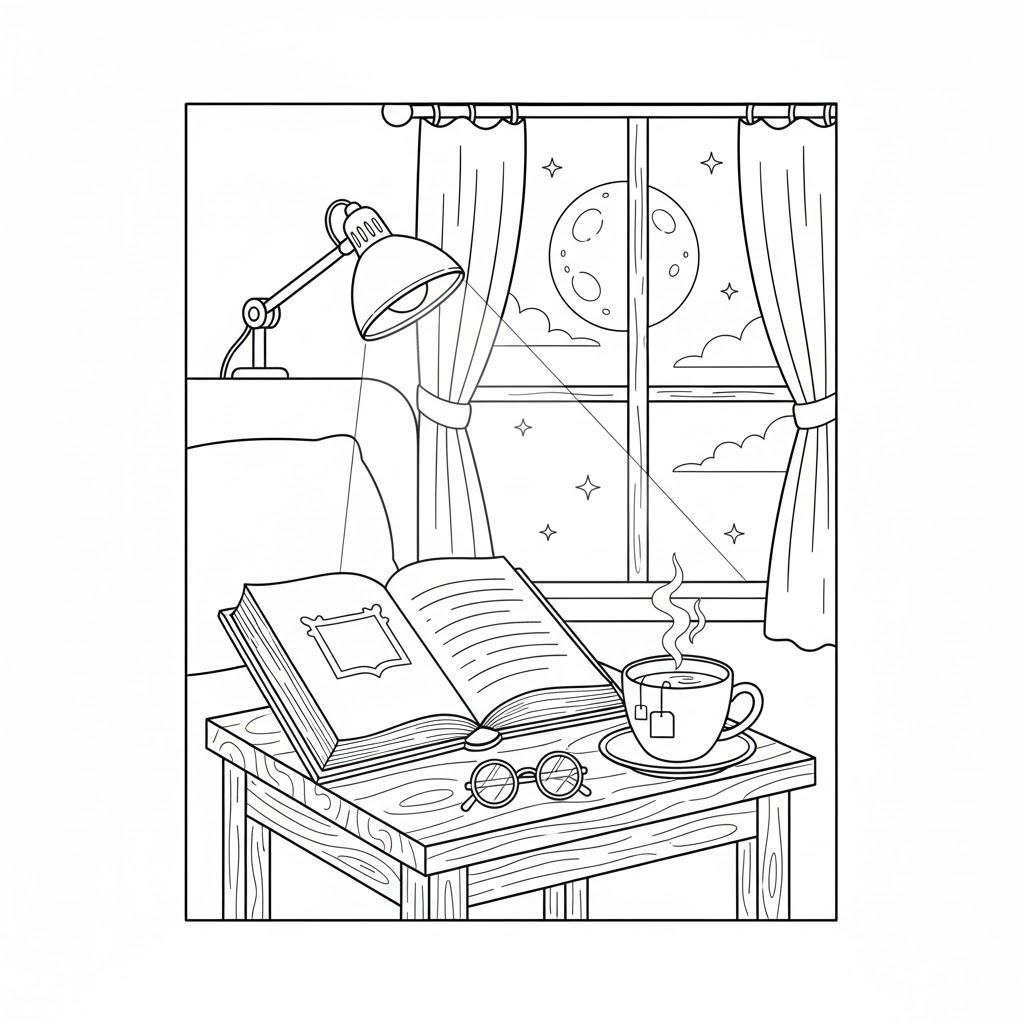
- The Side Table: Always have a dedicated spot for a drink. Whether it’s coffee, tea, or a glass of scotch, the ritual of preparing a drink is the “on-ramp” to the reading experience.
- Texture Matters: The knit throw over the chair in the drawing adds “visual weight.” Use heavy fabrics like wool, velvet, or corduroy to create a sense of security.
Final Thoughts: The Library as a Mirror
The most beautiful thing about the illustration you shared is that the shelves are full, but there is still room for more. It represents a life in progress.
In a world that feels increasingly loud, chaotic, and temporary, the physical library stands as a monument to the permanent and the profound. It’s a place where you can sit with the greatest minds in history and, for a few hours, let the rest of the world fade into the background.
Whether you’re reading a classic Russian novel, a modern thriller, or a DIY manual, the act of sitting in that chair is an act of self-care. It is a declaration that your time and your focus are valuable.