We’ve all been there: standing in front of a closet bursting with fabric, hangers Tangled like a puzzle, and yet, uttering those infamous words: “I have absolutely nothing to wear.”
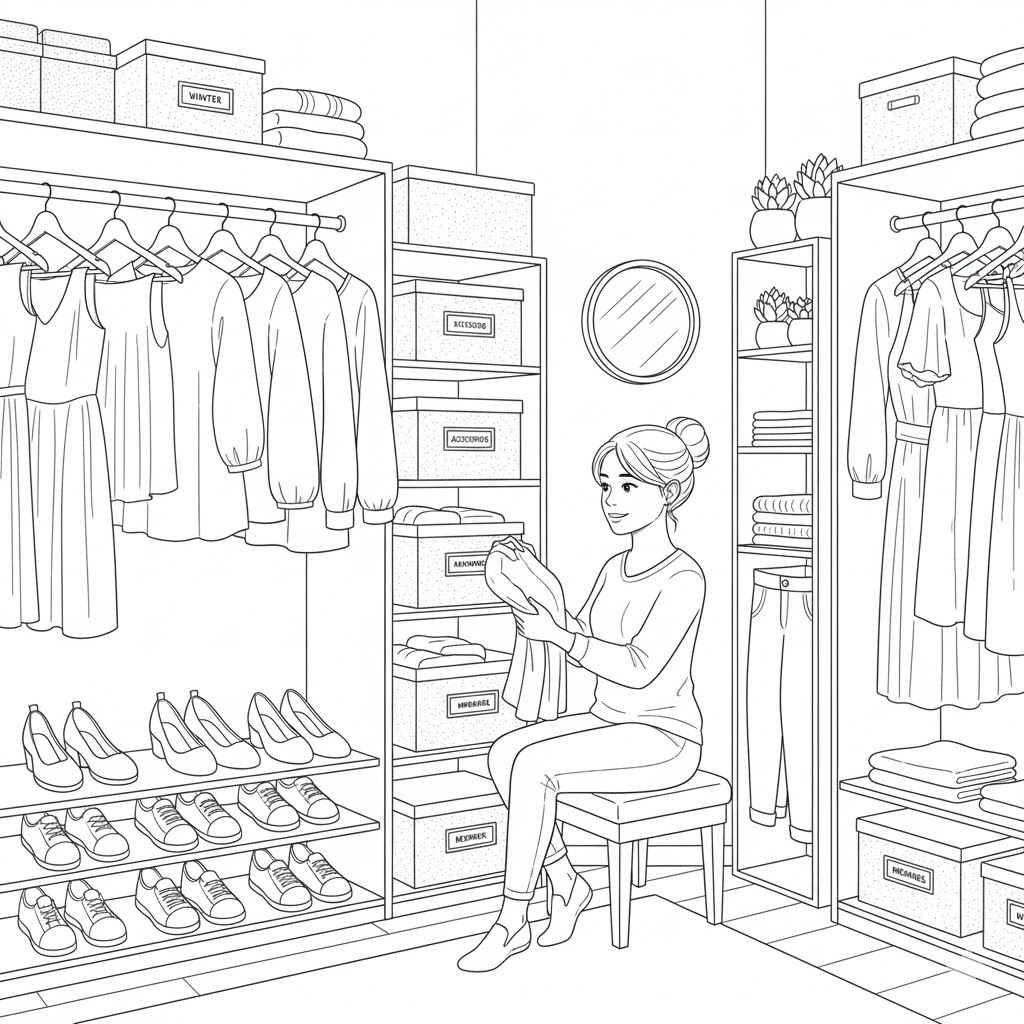
It’s a modern paradox. We possess more clothing than any generation in history, yet we feel less satisfied with our choices. The image of the woman sitting calmly amidst her organized racks isn’t just a Pinterest aesthetic—it’s a goal for mental well-being. When we organize our closets, we aren’t just folding fabric; we are editing our lives.
I. The Psychology of the Closet: Why Clutter Weighs Us Down
Before we grab the storage bins, we have to understand why the mess exists. Our closets are often emotional graveyards. We hold onto the “skinny jeans” from five years ago (guilt), the expensive dress we never wore (shame), and the sweater from an ex (nostalgia).
The Decision Fatigue Factor
Every morning, your brain has a limited amount of “decision energy.” If you start your day fighting through a jungle of mismatched shoes and shirts that don’t fit, you are depleting your cognitive resources before you’ve even had your first cup of coffee. A streamlined closet eliminates “decision fatigue,” allowing you to move into your day with confidence rather than frustration.
II. The Step-by-Step Guide to the Great Reset
In the illustration, notice how everything has a home. Achieving this requires a ruthless, yet loving, audit of your possessions.
1. The Full Empty-Out
You cannot organize a closet while there are still clothes in it. You must take everything out. Yes, everything. Lay it on the bed. Seeing the sheer volume of what you own is the “shock therapy” needed to make real changes.
2. The Three-Pile Method
As you go through each item, be honest. Use these categories:
- Love & Wear: Pieces that fit your body now and make you feel great.
- The “Maybe” Box: Items you haven’t worn in six months but aren’t ready to let go of. Seal this box. If you don’t open it in three months, donate the whole thing without looking inside.
- Pass It On: Items that are in good condition but no longer serve you.
3. Categorization by Function
Look at the shelving in the image. Notice the boxes labeled “Winter” and “Accessories.” Seasonality is the secret to a breathable closet. If it’s July, you shouldn’t be looking at wool coats. Store off-season items in airtight bins on the highest shelves to keep your primary “real estate” clear for what you need today.
III. Sustainable Style: Quality Over Quantity
The woman in the drawing looks content because she isn’t overwhelmed. This brings us to the concept of the Capsule Wardrobe.
In an era of “fast fashion,” we are conditioned to buy cheap items that fall apart after three washes. A sustainable closet focuses on “cost per wear.” A $100 pair of high-quality trousers you wear 50 times is significantly cheaper (and better for the planet) than a $20 pair you wear twice.
The Foundation Pieces
Every functional closet should have a “spine” of neutrals:
- A crisp white button-down.
- Perfectly tailored denim.
- A versatile blazer.
- The “Little Black Dress” (or jumpsuit).
- Comfortable, high-quality flats or sneakers.
IV. The Aesthetics of Organization: Tools of the Trade
If you want your closet to look like the illustration, you need the right “hardware.”
| Tool | Purpose | Benefit |
| Uniform Hangers | Slim velvet or wooden hangers. | Prevents slipping and creates visual harmony. |
| Clear Bins | For shoes or scarves. | Allows you to see what you have without digging. |
| Drawer Dividers | For rolled t-shirts and socks. | Keeps small items from becoming a “junk drawer.” |
| Label Maker | Categorizing bins. | Essential for maintaining the system long-term. |
The Power of the “Folding Ritual”
In the image, the woman is carefully holding a garment. This suggests a shift in mindset—treating clothing as an investment rather than a commodity. Learning techniques like the KonMari fold (where clothes stand upright) allows you to see every shirt you own at a glance, preventing the “bottom of the drawer” abyss.
V. Maintaining the Peace
The hardest part isn’t the clean-out; it’s the upkeep. To keep your closet looking like a sanctuary, implement the “One In, One Out” Rule. For every new garment you bring into your home, one must leave. This forces you to evaluate if a new purchase is truly worth displacing something you already love.
Monthly Maintenance
Once a month, spend 15 minutes resetting the space. Re-align the shoes, re-fold the sweaters that have toppled over, and ensure your “Winter” bins are still tucked away.
Conclusion: More Than Just a Room
A clean closet is a metaphor for a clear mind. When you open those doors in the morning, you shouldn’t feel a pang of anxiety. You should feel prepared. You should see a reflection of the person you are today—not who you were five years ago or who you hope to be when you lose ten pounds.
Take a cue from our illustrated friend: take a seat, take a breath, and start editing. Your future self will thank you for the extra ten minutes of peace every morning.