There is a specific, golden stillness that descends upon the earth during the Summer Solstice. It is the longest day of the year, a moment when the sun seems to pause at its highest point, flooding the world with an abundance of light and vitality. For centuries, this has been a time of profound spiritual significance—a communal celebration of fertility, growth, and the peak of nature’s power.
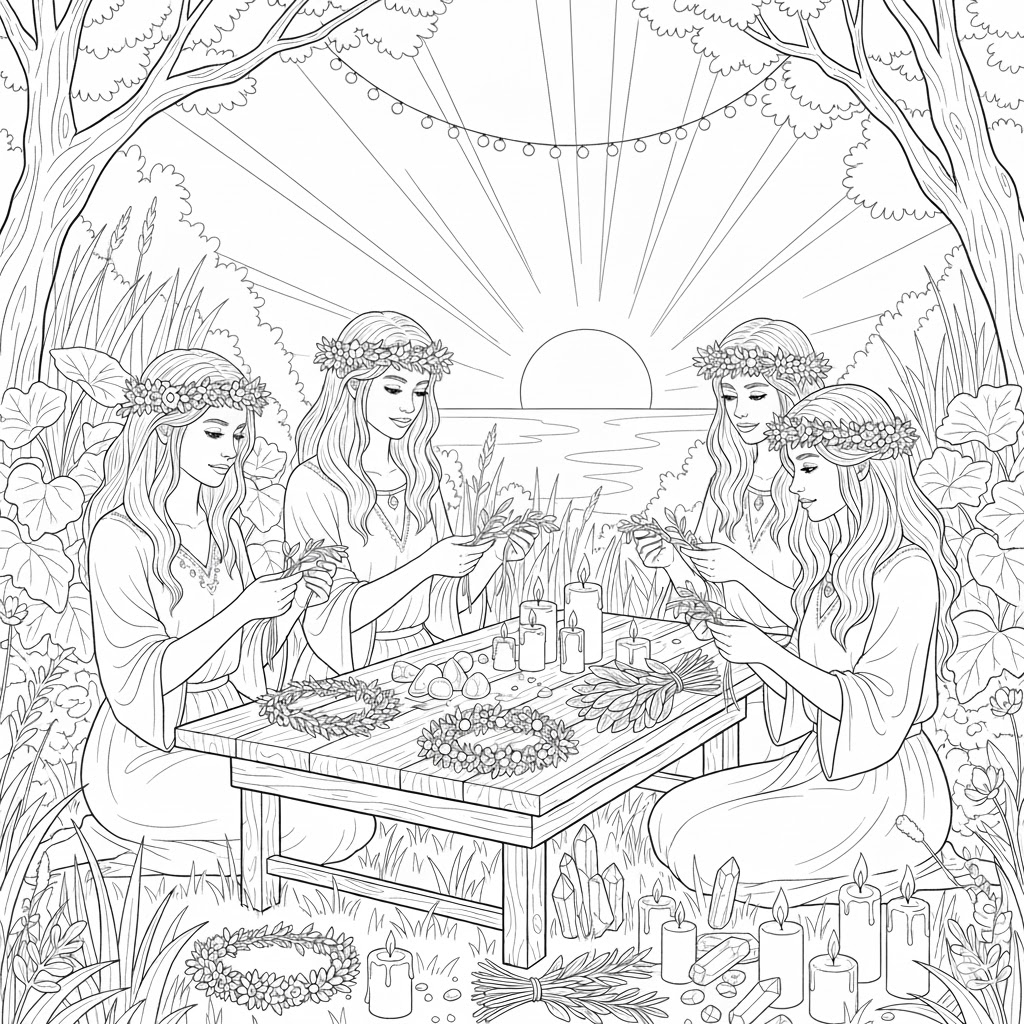
In the beautiful illustration above, we see a modern interpretation of these ancient traditions. Four women sit in a sun-drenched glade, their hands busy with the rhythmic art of weaving flower crowns. They aren’t just making accessories; they are weaving intentions. Surrounded by crystals, candles, and the lush greenery of midsummer, they represent the timeless connection between the human spirit and the cycles of the earth.
This blog explores how we can reclaim the magic of the Summer Solstice (often called Litha) through the simple, meditative practices of herbalism, community, and light-focused rituals.
1. The Symbolism of the Solstice
The word “solstice” comes from the Latin solstitium, meaning “sun stands still.” Spiritually, this represents a peak of outward energy. If the Winter Solstice is a time for inward reflection and dreaming in the dark, the Summer Solstice is about manifestation and celebration.
The Power of the Sun
The sun is the ultimate source of life on our planet. During the solstice, we celebrate the element of Fire. This isn’t just the fire of a bonfire, but the “inner fire”—our passion, our drive, and our ability to bring our dreams into reality.
The Midsummer Flora
In the image, the women are working with herbs and flowers. Traditionally, plants gathered on Midsummer Eve were thought to possess doubled medicinal and magical potency.
- St. John’s Wort: Perhaps the most iconic solstice herb, its bright yellow flowers mirror the sun. It was traditionally hung over doorways for protection and used to ward off melancholy.
- Lavender: Used for peace, purification, and to calm the high-octane energy of the summer heat.
- Oak Leaves: Representing strength and the “King of the Forest” during the light half of the year.
2. The Art of the Flower Crown: A Meditative Ritual
Weaving a flower crown (or wreath) is a foundational Midsummer activity. As seen in the artwork, the process is communal and focused.
Why We Weave
A circle has no beginning and no end. By creating a circular crown, we honor the cycle of the seasons. As you tuck each stem into the vine, you can practice “intent-setting.” For every flower added, visualize a blessing you wish to receive or a goal you want to achieve while the sun is at its strongest.
How to Create Your Own
You don’t need to be an expert florist to participate in this tradition.
- Gather: Use flexible greens like ivy, willow, or grapevine for the base.
- Select: Choose seasonal blooms like daisies, sunflowers, or wild roses.
- Bind: Use twine or thin wire to secure the flowers to the base.
- Wear or Gift: Wear your crown during your solstice celebration to connect with your “inner queen/king,” or cast it into a moving body of water as an offering to the spirits of nature.
3. Crystals and Candles: Anchoring the Light
The table in the illustration is adorned with crystals and candles—tools used to ground and amplify energy.
Solstice Crystals
If you are looking to set up a solstice altar, consider these stones:
- Citrine: The “Merchant’s Stone,” known for carrying the power of the sun and manifesting wealth and joy.
- Clear Quartz: To amplify your intentions and the intense light of the day.
- Carnelian: To boost creativity and physical energy.
- Sunstone: To instill good fortune and heightens intuition.
The Role of Candle Magic
Even though the sun is at its brightest, candles are lit to represent the “earthly sun.” In the image, several candles flicker on the table and the ground. Lighting a candle at sunset on the solstice is a way to transition from the power of the outer world to the warmth of the home.
4. Community and the Sacred Feminine
One of the most striking elements of the image is the sense of sisterhood. Throughout history, Midsummer was a time for the community to gather. Whether it was dancing around a maypole or jumping over bonfires for luck, the emphasis was on shared experience.
In our modern, often isolated lives, the Summer Solstice serves as a reminder to reconnect.
- Host a Potluck: Share seasonal fruits, honey cakes, and elderflower cordial.
- Circle Up: Like the women in the drawing, sit in a circle. Share what you are grateful for from the first half of the year and what you hope to harvest in the autumn.
- Collaborate: There is a unique magic that happens when people create together. Working on a shared craft helps lower stress and fosters deep, authentic conversation.
5. Integrating Solstice Magic into Modern Life
You don’t need to live in a forest to celebrate Midsummer. You can bring the essence of the “Golden Hour” into your daily routine.
| Activity | Modern Application |
| Sunrise Watching | Set an alarm and greet the sun with a cup of tea on your porch. |
| Solar Water | Leave a glass jar of water in the sun for 4-5 hours to “charge,” then use it to water your plants or wash your face. |
| Gratitude Journaling | Write down 10 things that have “bloomed” in your life since January. |
| Earthing | Spend 15 minutes walking barefoot in the grass to discharge excess energy. |
Conclusion: Honoring the Peak before the Fade
The Summer Solstice is a bittersweet moment. It is the height of the light, but it also marks the moment the days begin to shorten again. This teaches us the vital lesson of presence. The women in the illustration aren’t worried about the coming winter; they are fully immersed in the scent of the herbs, the warmth of the sun, and the company of one another. By engaging in these rituals—whether it’s coloring this very image, weaving a crown, or simply sitting in the grass—we remind ourselves that we are a part of nature, not separate from it.